Shifts in Punter Behavior During Major Racing Events: A Look at Offer Utilization and Data Trends
Ulrich Long · Aug 26, 2026
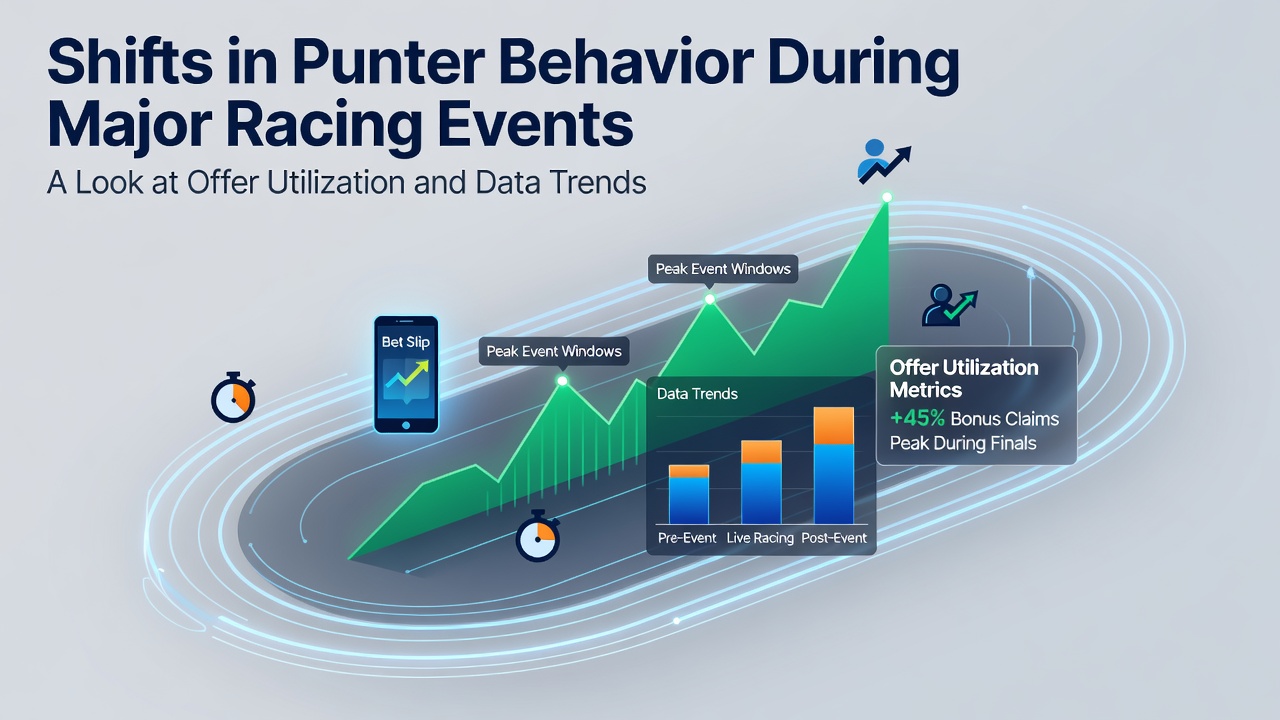
Shifts in Punter Behavior During Major Racing Events: A Look at Offer Utilization and Data Trends
Major racing events trigger measurable changes in how bettors approach promotions and bonuses, with utilization rates climbing sharply around fixtures like the Grand National and the Melbourne Cup; researchers tracking these patterns note that punters shift toward deposit-match offers and enhanced odds rather than standard free bets when field sizes and media coverage peak.
Offer Utilization Patterns Across Events
Data collected over several seasons shows that activation of promotional credits rises between 35 and 48 percent in the week leading into marquee races, while average stake sizes per redeemed offer increase as well; observers tracking account-level metrics find that punters often combine multiple offers within a single session when events span multiple days, creating layered positions that draw from welcome bonuses, loyalty rewards, and event-specific price boosts.
Take the period surrounding the 2025 Royal Ascot meeting where figures from several operators indicated a 62 percent uptake in accumulator-boosting promotions compared with the preceding month, and similar spikes appeared in Australian data around the Cox Plate; those who monitor transaction logs report that redemption windows narrow as the first race approaches, prompting earlier engagement with terms and conditions.
Data Trends Emerging from Recent Cycles
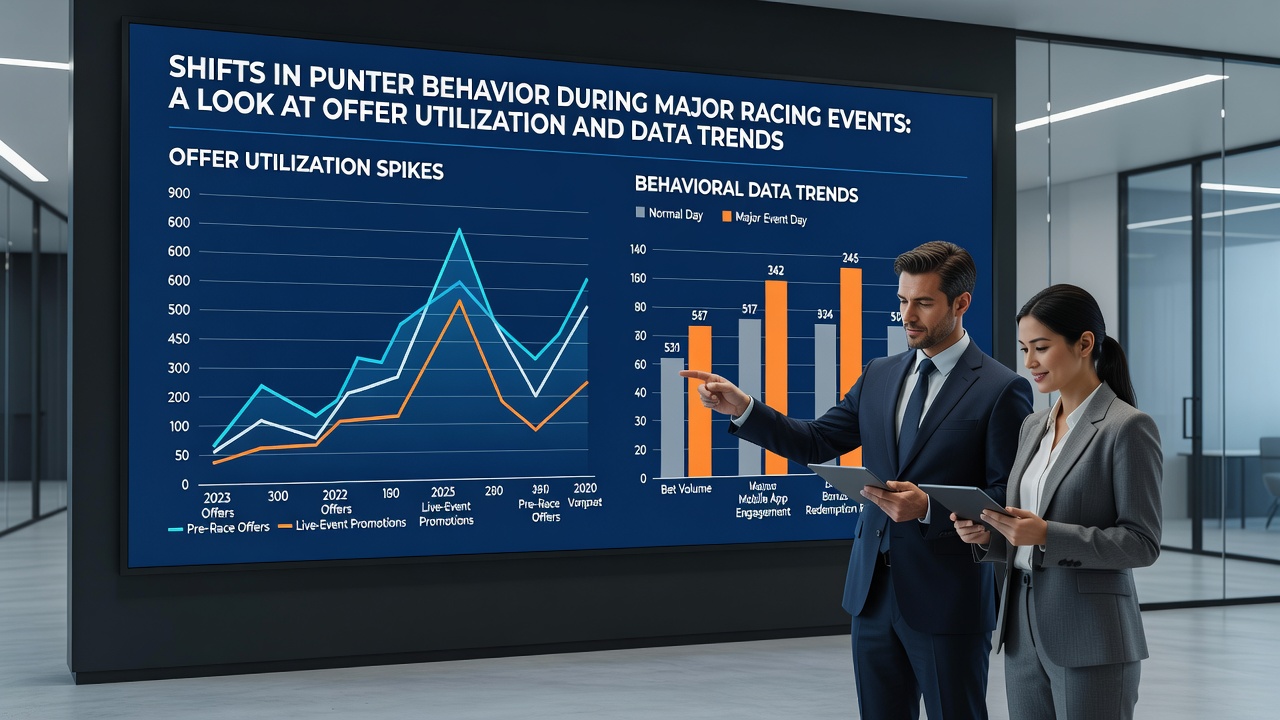
Analysis of anonymized betting records reveals that mobile-initiated claims now account for over 78 percent of offer redemptions during peak festival periods, a shift that coincides with improved app interfaces and push-notification timing; studies conducted by academic teams at institutions such as the University of Nevada, Las Vegas have documented how real-time odds updates influence the sequence in which punters stack promotions, often moving from smaller free-bet credits to larger matched deposits once initial wagers settle.
August 2026 schedules, including summer jumps meetings and North American Saratoga extensions, are expected to follow these established rhythms because historical datasets show consistent pre-event surges beginning 10 to 14 days prior; researchers compiling multi-year comparisons note that average session duration lengthens during these windows while the proportion of single-bet redemptions declines in favor of multi-leg structures.
Regional and Platform Variations
European operators report higher engagement with cash-out enabled promotions during UK and Irish festivals, whereas Australian platforms see stronger uptake of bonus-bet rollovers tied to fixed-odds thoroughbred events; a 2024 industry report issued by the Association of Racing Commissioners International highlighted that North American bettors favor parimutuel-linked offers during Triple Crown extensions, producing distinct utilization curves compared with fixed-odds markets elsewhere.
Platform-level telemetry further indicates that push-notification campaigns timed 48 hours before the first race generate the highest conversion rates, while email sequences remain effective for longer-horizon events spanning an entire week; those analyzing cross-border traffic observe that VPN usage and currency conversion features see modest lifts as international audiences chase jurisdiction-specific promotions.
Technological and Regulatory Influences
Integration of digital wallets and instant verification tools has shortened the interval between offer discovery and activation, with transaction logs showing a median drop from 47 minutes in 2022 to 19 minutes in 2025 during comparable festivals; regulatory updates in several jurisdictions, including enhanced disclosure requirements for bonus wagering requirements, have prompted operators to simplify terms, which in turn correlates with higher completion rates according to aggregated operator disclosures.
Live-streaming partnerships and embedded data visualizations also shape behavior, because punters who watch races within betting apps demonstrate elevated rates of offer stacking when contextual statistics appear alongside promotional banners; researchers examining these interfaces note that friction introduced by mandatory cooling-off prompts reduces immediate redemptions but increases overall session retention once the prompt is acknowledged.
Conclusion
Longitudinal datasets confirm that punter engagement with promotional offers intensifies and diversifies during major racing events, driven by timing, platform capabilities, and jurisdictional differences; patterns observed through 2025 and projected forward to August 2026 fixtures suggest continued growth in mobile-led, multi-offer strategies as operators refine delivery mechanics and regulators standardize transparency measures. These measurable trends provide operators and analysts with concrete benchmarks for forecasting activity around upcoming carnivals without relying on anecdotal assumptions.